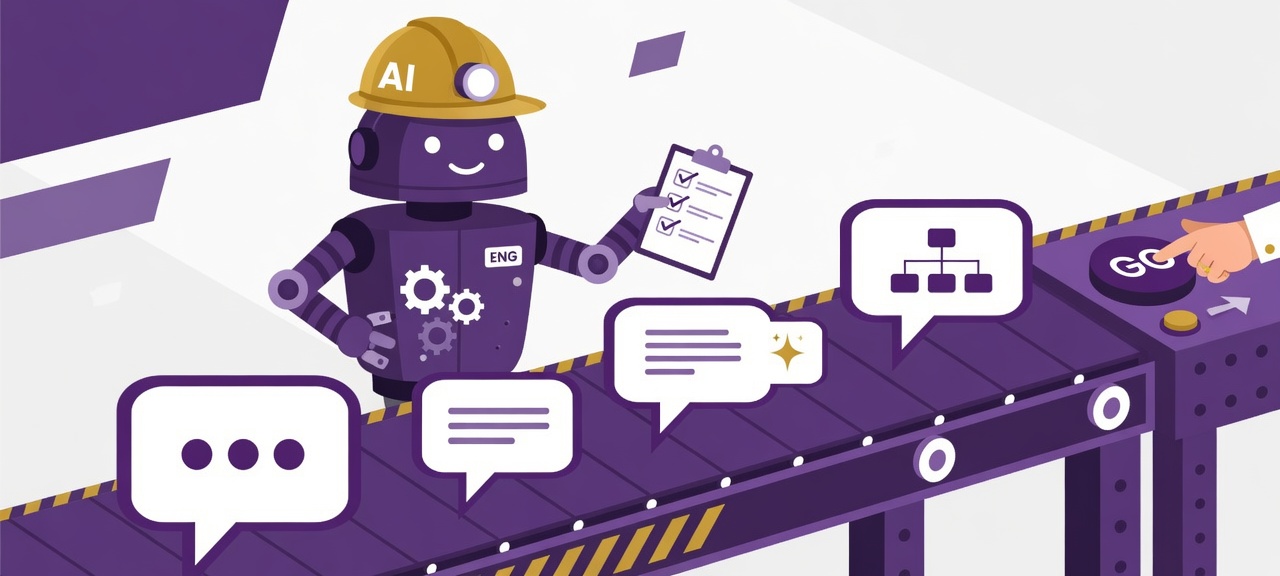
Every AI demo is impressive. The gap between a demo and a feature is what happens on the bad days: the provider outage, the weird question, the customer who types their life story into the chat box at 1am. We run a customer-facing AI assistant in production on our flagship platform, and every rule in this post was learned from a real bad day.
Rule 1: Ground it or don't ship it
An assistant that improvises answers about your prices, availability, or policies is a liability with a typing indicator. Ours answers from the business's actual published content and real availability data. When the grounding doesn't contain the answer, the correct response is a graceful "let me get a human," never a confident guess.
Rule 2: Providers fail. Plan like it.
Models have outages, rate limits, and slow days, and they never schedule them with you. Our assistant runs a retry-and-fallback chain: if the primary model errors or stalls past its time budget, the request moves to a backup, and the customer just sees an answer. The day a major provider had a rough afternoon, our chat kept working and nobody noticed. That's the whole point.
Reliability isn't a model feature. It's an architecture feature. The chain matters more than the model.
Rule 3: Cap what it can promise
Decide the assistant's authority ceiling explicitly. Ours can answer, explain, and guide a booking. It cannot invent discounts, promise delivery exceptions, or discuss other customers' information; privacy rules mean it can say a time slot is open without ever revealing who booked the neighboring one. Write these limits into the system, not into a hope.
Rule 4: Escalate like a good employee
The best assistants know when they're beat. Low confidence, frustrated customer, or high-stakes question: hand off to a human with the full conversation attached, so the customer never repeats themselves. An escalation that loses context is just a second bad experience.
Rule 5: Read the transcripts
Every conversation is a free product review. A weekly read of the transcripts tells you what customers actually ask, where the assistant stumbles, and, more often than you'd expect, what the business itself is unclear about. Half our assistant improvements started as a confusing question in a transcript.