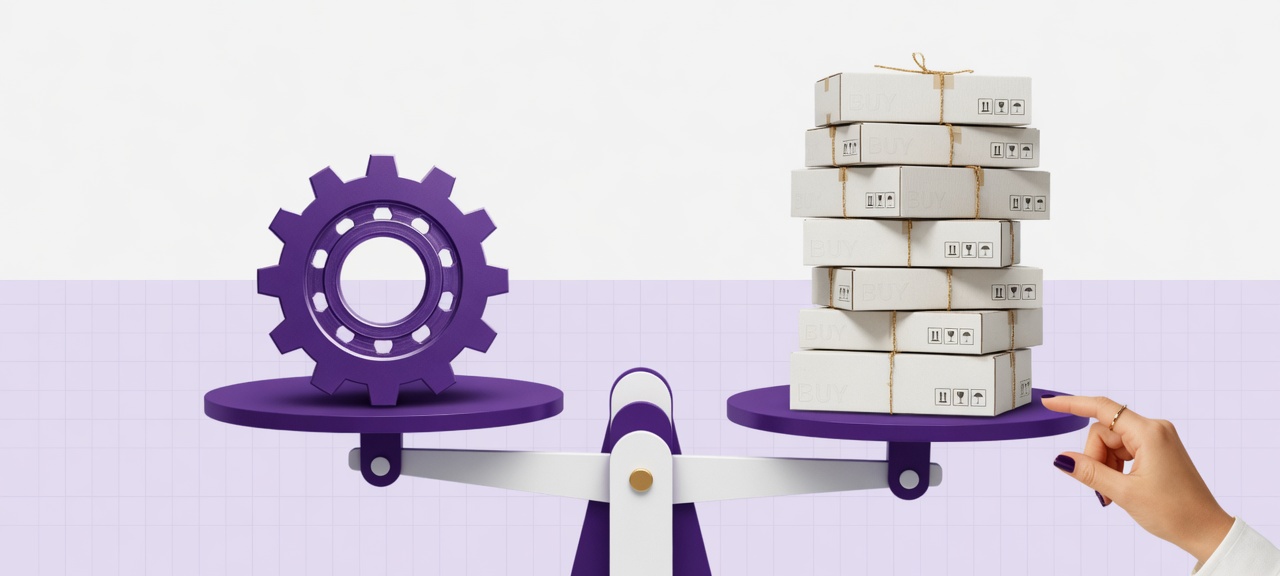
The build-versus-buy debate usually gets argued with the wrong spreadsheet. SaaS looks cheap: a monthly fee against a five-figure build quote is no contest. But that comparison counts one column of a four-column table.
The four columns
- Subscription stack. Not one tool: the booking tool plus the invoicing tool plus the scheduling tool plus the forms tool plus the automation glue connecting them. Sum the real stack, multiply by years.
- The glue labor. Someone retypes data between tools, reconciles mismatches, and untangles the automation when it breaks. That someone is payroll, often the owner's nights.
- The fit tax. Every place a tool almost fits, you either bend the business to the tool or lose the customer the tool couldn't serve. This column is invisible and usually the biggest.
- The build. Yes, custom costs real money up front. It's the only column that goes down over time: once encoded, a workflow costs nothing to run forever.
SaaS pricing is a flat line forever. A build is a curve that crosses it, and the crossing point comes earlier than most owners think.
When buying wins, honestly
Standard problem, standard tool: accounting, documents, generic CRM for a simple pipeline. If your workflow fits a template without bending, buy the template. We tell prospects this on scoping calls regularly, because a client who didn't need us is cheaper than a project that shouldn't exist.
When building wins
Build when the workflow IS the business: your scheduling rules, your delivery promise, your pricing logic. That's not a feature list a vendor will ever ship, because it's yours. Our own studio ran on the subscription stack for years before the math flipped; the platform we then built has since processed 7,500+ jobs, and the subscription line on the P&L mostly vanished.
The hybrid nobody markets
The real answer is usually both: buy the commodity layers (email delivery, payments rails, file storage), build the differentiated core, and integrate honestly. Own what makes you different; rent what doesn't.